
Quick Answer: A cosmetic damage exclusion is a policy endorsement that stops your insurer from paying for hail or wind damage that changes how your roof looks but does not affect how it works. It is most often applied to metal roofing and metal parts like vents and gutters, and wording varies by policy. Ranger Roofing & Construction documents functional damage during free inspections; call (940) 320-7663.
Many DFW homeowners only learn their policy has a cosmetic damage exclusion after a hailstorm, when a claim comes back with a smaller payment than expected. The language is usually tucked into an endorsement, not the main policy. This guide explains what the exclusion does, how insurers separate cosmetic damage from functional damage, how to find out if your policy has one, and what to do if you think your roof damage was misjudged.
What Is a Cosmetic Damage Exclusion?
A cosmetic damage exclusion is an add-on to a homeowners policy that excludes hail or wind damage affecting only appearance. If a hailstone dents a metal panel but the panel still keeps water out, the insurer may treat that dent as cosmetic and decline to pay for it.
How the exclusion usually works:
- It is added to a policy as an endorsement, not written into the main policy form
- It is often offered in exchange for a lower premium
- It shifts the cost of damage that looks bad but does not cause leaks onto the homeowner
Because the details live in endorsements, two neighbors with the same insurer can have very different coverage after the same storm.
What Counts as Cosmetic Damage Versus Functional Damage?
Functional damage harms the roof's ability to shed water or shortens its expected life. Cosmetic damage changes only the way it looks. The line between the two is where most disputes happen.
Examples that are usually treated as functional damage:
- Shingles with cracked or fractured mats from hail impacts
- Granule loss that exposes the asphalt underneath
- Punctures, tears, or missing shingles
- Lifted or creased shingles from wind
- Damaged flashing that lets water in
Examples that may be treated as cosmetic under an exclusion:
- Shallow dents in metal roof panels with no cracks or openings
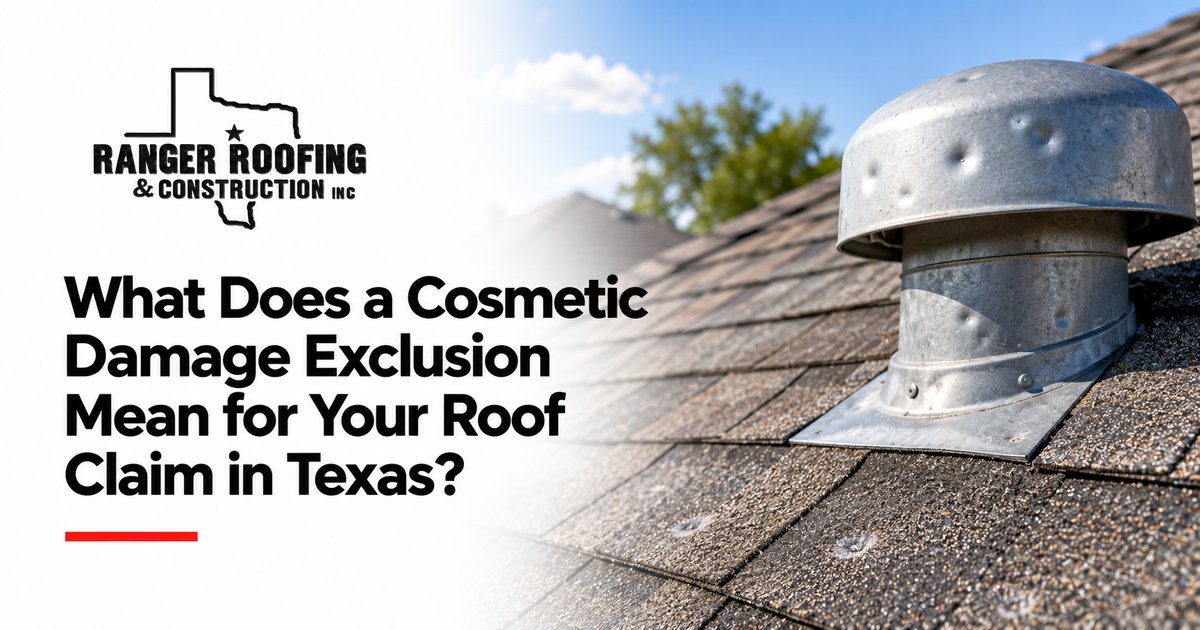
- Dents in metal vents, caps, or gutters that still work normally
- Minor surface marks that do not break the material
Some policies apply the exclusion only to metal roofing. Others extend it to other roof materials. Reading your own endorsement is the only way to know which applies to you.
How Do You Find Out If Your Policy Has a Cosmetic Exclusion?
Check your declarations page first. It lists every endorsement attached to your policy by name or form number. Look for wording such as:
- "Cosmetic damage exclusion"
- "Cosmetic loss"
- "Roof surfacing" limits or roof payment schedules
If the language is unclear, ask your insurance agent directly whether your policy excludes cosmetic hail damage to the roof, and ask for the answer in writing. You can also request a full certified copy of your policy, including all endorsements. The Texas Department of Insurance home insurance guide explains that most companies offer endorsements that change your coverage, so it pays to know exactly which ones you have before a storm, not after.
Does a Cosmetic Exclusion Mean Your Hail Claim Will Be Denied?
No. A cosmetic exclusion only removes coverage for damage that is purely cosmetic. Any functional damage from the same storm should still be evaluated under the rest of your policy.
This is why the inspection matters so much. If an adjuster sees dents on a metal roof and labels the whole loss cosmetic, the claim may be underpaid. A careful inspection may find functional damage elsewhere, such as:
- Cracked asphalt shingles on another roof section
- Damaged flashing
- Punctures around vents and other penetrations
Documenting each type of damage separately helps the adjuster see the full picture. For a broader look at what your policy may cover, read our guide on whether homeowners insurance pays for a new roof after a Texas hail storm.
How Does Roof Material Affect Cosmetic Damage Claims?
Metal roofs are the most common target of cosmetic exclusions because hail can dent metal without breaking it. Here is how the main roof types tend to behave:
- Metal roofing (standing seam or stone-coated steel): hail can leave dents while the roof stays watertight, which is exactly what the exclusion is written for
- Asphalt shingles: hail usually bruises, cracks, or knocks granules off rather than denting, and those effects tend to be functional
- Impact-resistant Class 4 shingles: designed to resist hail damage in the first place
If you are weighing materials, our guide on whether Class 4 impact-resistant shingles are worth it for DFW homes covers the tradeoffs.
What Should You Do If Your Claim Was Labeled Cosmetic?
Start by asking your insurer for the adjuster's full report and photos, and for the exact policy language they relied on. Then compare the report with an independent roof inspection.
Steps that help:
- Get a detailed inspection with clear photos of each damaged area
- Ask your roofer to separate functional damage from cosmetic damage in writing
- Request a re-inspection if the report missed damaged areas
- Keep all letters, emails, and photos in one place
If you still believe the decision is wrong, you can call the Texas Department of Insurance Help Line at 800-252-3439 for guidance on your options.
How Can You Protect Yourself Before the Next Storm?
Read your endorsements now, while there is no claim on the line. If your policy has a cosmetic exclusion and you have a metal roof, decide whether the premium savings are worth the risk.
A simple pre-storm checklist:
- Ask your agent whether removing the endorsement is an option and what it would cost
- Keep dated photos of your roof in good condition
- Store installation paperwork and warranty documents in one place
- After a storm, report the claim promptly and schedule an inspection before the adjuster visits
Ranger Roofing & Construction provides free inspections with 4K drone documentation across Denton, Collin, Dallas, and Tarrant counties.
What Should You Ask Your Insurance Agent About Cosmetic Coverage?
The easiest way to avoid a surprise is to ask direct questions before you need to file. A short call with your agent can tell you exactly where you stand.
Questions worth asking:
- Does my policy include a cosmetic damage exclusion or any roof surfacing limit?
- Which roof materials and parts does it apply to, such as metal panels, vents, or gutters?
- How does my policy define cosmetic damage versus functional damage?
- Is my roof covered at replacement cost or actual cash value?
- What would it cost to remove the exclusion at renewal?
Write down the answers, note the date and the name of the person you spoke with, and ask for anything important in writing. If you are planning a new roof, ask the same questions before you choose a material, since the answers may change which roof makes the most sense for your home and your budget.
Frequently Asked Questions
Does a cosmetic exclusion apply to asphalt shingles?
It depends on your policy. Many cosmetic exclusions are written for metal roofing and metal components, but some extend to other materials. Check the endorsement on your declarations page or ask your agent in writing.
Will my insurer still pay for leaks if I have a cosmetic exclusion?
A cosmetic exclusion is meant to remove coverage only for damage that affects appearance. Damage that lets water in or shortens the roof's life is functional and should still be evaluated under the rest of your policy.
Are dented gutters covered after hail?
If your policy has a cosmetic exclusion that covers metal parts, dents that do not affect how gutters work may be excluded. Gutters that are cracked, separated, or no longer draining properly are a different matter and should be documented.
Can I remove a cosmetic damage exclusion from my policy?
Some insurers allow it, usually for a higher premium. Ask your agent what options are available at your next renewal.
Who decides whether roof damage is cosmetic or functional?
Your insurance company's adjuster makes the initial call based on the inspection and your policy language. Independent documentation from a roofing contractor can help show functional damage the adjuster may have missed.
Need help now? Call or text Ranger Roofing & Construction at (940) 320-7663 or request your free inspection online.
Key Takeaways
A cosmetic damage exclusion removes coverage for hail or wind damage that changes how a roof looks but not how it works. It is most often applied to metal roofing and metal parts like vents and gutters, and the exact wording lives in your policy endorsements. Functional damage from the same storm should still be evaluated under the rest of your policy. Check your declarations page now, and get a detailed inspection after every major hailstorm.
- A cosmetic damage exclusion removes coverage for hail or wind damage that only affects appearance.
- It is most often applied to metal roofing and metal components such as vents and gutters.
- Functional damage, like cracked shingles or punctures, should still be evaluated under the rest of your policy.
- Your declarations page lists every endorsement, so check it before a storm.
- A detailed inspection that separates functional from cosmetic damage strengthens your claim.
- Schedule a free roof inspection after any hailstorm in DFW.